
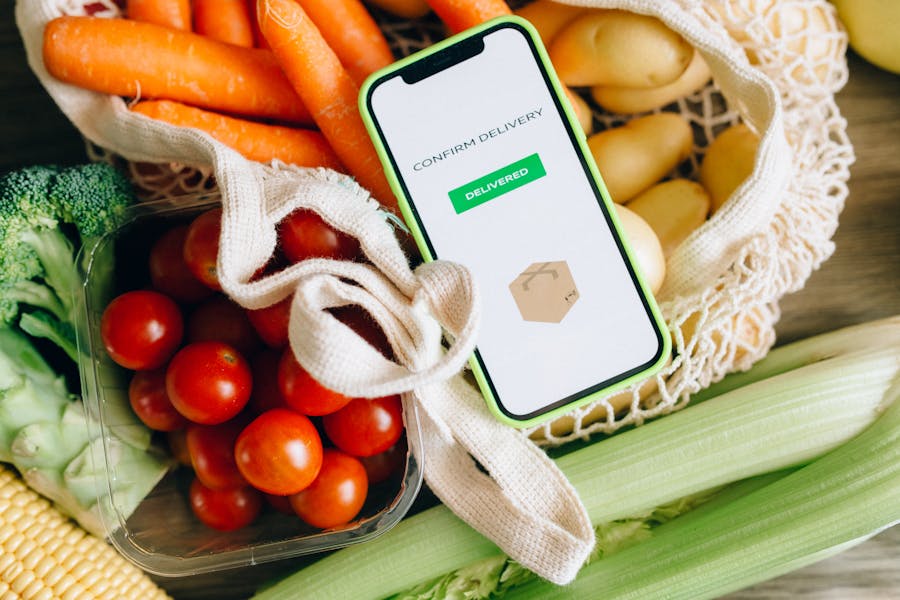
Nutrition tracking apps have transformed how people interact with their diet. What once required a registered dietitian, food composition tables, and hours of manual calculation can now be done in seconds with a smartphone camera. But not all nutrition apps are equal — and more importantly, not all approaches to using them are equally effective. This guide covers how nutrition apps work, what the research says about their effectiveness, and how to choose and use the right one for your goals.
Why Track Nutrition at All?
The case for nutrition tracking rests on a fundamental problem with human dietary assessment: we are consistently inaccurate about what and how much we eat. Multiple studies have shown that self-reported dietary recall — asking people what they ate over the past 24 hours — underestimates actual caloric intake by 12–40% depending on population. In other words, without a systematic tracking method, most people have little reliable understanding of their actual nutritional intake.
This matters because nutrition goals — whether fat loss, muscle building, cardiovascular health, or simply eating more vegetables — require specific quantitative targets. Hitting a protein target of 150g per day requires knowing how much protein you are currently eating. Managing caloric intake for weight loss requires knowing your current intake. Tracking provides the data that makes evidence-based nutrition adjustments possible.
A 2019 systematic review of 15 randomised controlled trials found that self-monitoring dietary intake — including app-based tracking — was significantly associated with greater weight loss outcomes compared to no monitoring, with a mean additional weight loss of 3.3kg over 6 months. The effect was strongest in people who tracked consistently rather than intermittently.
How Nutrition Apps Work
All nutrition tracking apps work from the same basic architecture: a food database, a logging interface, and a nutritional analysis layer. Understanding how each component works helps you evaluate app quality and use them more effectively.
Food databases — where accuracy starts and ends
The nutritional data in any app is only as accurate as its food database. There are three primary types of data sources used by nutrition apps:
- Government nutritional databases — USDA FoodData Central (USA), NCCDB, and equivalent national databases. These contain laboratory-verified nutritional data for thousands of foods. Apps that draw primarily from these sources provide the highest accuracy.
- User-submitted entries — the most common source of error in apps like MyFitnessPal. When users create entries for restaurant foods or branded products, errors are common and go largely uncorrected. Studies have found that up to 53% of user-submitted entries in large nutrition databases contain significant errors.
- Manufacturer data — nutritional information submitted by food manufacturers, typically accurate for packaged foods but subject to the inherent ±20% labelling tolerance permitted by the FDA.
Barcode scanning
Barcode scanning allows instant logging of packaged foods by reading the product’s barcode and pulling nutritional data directly from the manufacturer’s submission. This is typically the most accurate logging method for packaged foods. All major nutrition apps include barcode scanning; quality varies primarily in database coverage (how many barcodes are recognised) and the accuracy of the underlying data.
Portion estimation and food photography
The weakest link in any nutrition tracking system is portion estimation. Errors of 50–100% in portion size estimation are common, which can produce meaningful errors in caloric calculations even when the nutritional data per 100g is accurate. Weighing food on a kitchen scale is the only method that produces consistently accurate portion data — apps that encourage this produce better dietary assessment than those relying on volume or visual estimates.
AI-powered food photography recognition — pointing a camera at a meal and having the app automatically identify and log its nutritional content — is an emerging feature in several apps. Current technology is impressive for simple foods and meals but unreliable for mixed dishes, restaurant foods, and anything with complex ingredient combinations. Useful as a quick estimate; insufficient for precision tracking.
Types of Nutrition Apps and What Each Does Best
Calorie and macro trackers
The most common type. These apps log food intake and display calories, protein, carbohydrates, and fat against user-set daily targets. MyFitnessPal is the dominant example — the largest food database globally, the most widely used barcode scanner, and a straightforward logging interface that most people find easy to use consistently. The primary limitation is database accuracy, as discussed above.
Best for: Beginners new to tracking; people primarily focused on caloric intake and macronutrient ratios; those who prioritise ease of use and the largest possible food database.
Micronutrient trackers
A subset of apps that go beyond macros to track the full micronutrient profile of your diet — vitamins, minerals, essential fatty acids, and amino acids. Cronometer is the leading example and the clear best-in-class for micronutrient accuracy, drawing primarily from verified government databases rather than user submissions. It is significantly more accurate than MyFitnessPal for micronutrient data but has a smaller branded food database and a steeper learning curve.
Best for: Anyone serious about understanding the full nutritional picture of their diet; people with specific health conditions requiring micronutrient monitoring; athletes tracking detailed dietary data for performance; people who are vegetarian or vegan and want to monitor potential deficiencies.
Adaptive dieting apps
These apps adjust nutritional targets dynamically based on your actual progress — body weight, measurements, training data — rather than setting static targets. Carbon Diet Coach, built by Dr. Layne Norton, is the leading example. The app analyses your weekly check-in data (weight, measurements, hunger, energy) and adjusts caloric and protein targets accordingly. This removes the guesswork of recalculating targets as your metabolism adapts.
Best for: Intermediate and advanced trainees who have already learned basic tracking and want a data-driven approach to body recomposition; people who have experienced weight loss stalls and need dynamic target adjustment.
Meal planning apps
Rather than logging after the fact, meal planning apps help you plan your meals in advance to hit your targets before you eat. This approach is cognitively very different from post-hoc logging and suits some people significantly better. Apps like Eat This Much and Mealime generate meal plans that meet specified nutritional targets and automatically generate shopping lists.
Best for: People who find post-hoc logging tedious or unreliable; those who prefer planning over tracking; anyone who wants to simplify the decision-making around daily food choices.
| App | Best for | Database accuracy | Key limitation | Cost |
|---|---|---|---|---|
| Cronometer | Micronutrient tracking, accuracy | ★★★★★ | Smaller branded food database | Free / $8.99/mo premium |
| MyFitnessPal | Ease of use, food database size | ★★★ | User-submitted entry errors | Free / $19.99/mo premium |
| Carbon Diet Coach | Body recomposition, adaptive targets | ★★★★ | Cost; requires consistent check-ins | $19.99/mo |
| Lose It! | Weight loss focus, clean UI | ★★★★ | Less depth on micronutrients | Free / $39.99/yr premium |
| MacroFactor | TDEE calculation, progression tracking | ★★★★ | Premium only; learning curve | $11.99/mo |
Integration with Fitness Trackers and Wearables
One of the most significant recent developments in nutrition apps is deeper integration with wearable fitness trackers. Apps that connect to a Garmin, Apple Watch, Whoop, or Oura Ring can incorporate real-time energy expenditure data alongside food intake, giving a more accurate picture of net caloric balance than either source provides alone.
The limitation is accuracy of wearable calorie estimates. Research consistently shows that consumer fitness trackers overestimate energy expenditure — often by 20–40% for activities like cycling and strength training. Using these figures uncritically to set eating targets can inadvertently create excessive surpluses or insufficient deficits. The most reliable approach is to use wearable data as a directional guide rather than a precise figure, and to validate against actual weight and composition changes over two to four weeks.
Our wearable tracker guide covers which devices provide the most accurate metabolic data and how to interpret wearable energy expenditure estimates intelligently.
How to Get the Most Out of Nutrition Apps
Start with a baseline — don’t immediately restrict
The most useful first step with any nutrition app is logging your current diet for one to two weeks without making any changes. This establishes your baseline intake — actual calories, protein, micronutrients — which gives you the data to make informed adjustments. Most people are surprised by what they find: calories are higher or lower than expected, protein is typically significantly below target, and micronutrient gaps are often visible.
Weigh food where it matters most
You do not need to weigh everything. Prioritise accuracy for the foods that contribute the most calories and protein to your diet — cooking oils (which are easy to dramatically underestimate), protein portions, grains, and nut butters. Vegetables, leafy greens, and low-calorie foods are less important to weigh precisely.
Log before you eat, not after
Pre-logging — entering the meal you plan to eat before eating it — is consistently more accurate than post-hoc recall and allows you to adjust portions before eating if the nutritional profile does not meet your targets.
Track consistently, not perfectly
Intermittent, sporadic tracking produces less reliable data and worse outcomes than consistent imperfect tracking. A week of consistently logging at 90% accuracy produces better insights than three days of perfect logging followed by four days of nothing.
Use the data, then build intuition
The goal of nutrition tracking is not to track forever — it is to build a sufficiently accurate intuitive understanding of your dietary intake that you can hit your nutritional targets without logging everything. Most people reach this point after three to six months of consistent tracking, after which periodic check-ins are sufficient to maintain accuracy.
The Limitations of Nutrition Apps
Nutrition apps are tools, not solutions. Several important limitations are worth understanding:
- They measure input, not outcome. Caloric and macronutrient targets are based on population-average equations (Harris-Benedict, Mifflin-St Jeor) that can be significantly inaccurate for individuals. Actual metabolic rate varies by ±15% or more around these estimates. Always validate app-derived targets against real-world outcomes over two to four weeks.
- They can fuel disordered relationships with food. For some people, particularly those with a history of restrictive eating, detailed food logging can reinforce unhealthy patterns. If tracking feels compulsive, anxiety-inducing, or is interfering with normal social eating, discontinue and consider speaking with a registered dietitian instead.
- Restaurant and home-cooked meals are inherently imprecise. Restaurant nutritional data is notoriously variable — studies have shown restaurant calorie counts are off by an average of 18%, with some dishes varying by 300+ calories from stated values. Treat restaurant entries as rough estimates.
For nutrition guidance that goes beyond what any app can provide, see our nutrition education section for evidence-based guides to macronutrients, micronutrients, and the fundamentals of dietary planning. For context on how nutrition supports your specific training goals, see our guides on nutrition for muscle building and nutrition for cardiovascular health.


